Tobacco Harm Reduction?


I recently signed up for the newsletter Nicotine Science and Policy (NSP). Because I write about science and addictive drugs, I thought it would be right up my alley. But in scanning the first few editions of the newsletter, I came across the term “tobacco harm reduction” repeatedly. Could the tobacco industry be up to its old tricks of manipulating science? I asked Google, “Who funds Nicotine Science and Policy?” Here’s Google’s answer:
Nicotine Science and Policy (nictoinepolicy.net) is owned and managed by Knowledge•Action•Change (K•A•C), a UK-based public health agency that focuses on harm reduction.
From Tobacco Tactics [at the UK’s University of Bath]: K•A•C and its projects, including this [the NSP] website, have been primarily funded through multi-million-dollar grants from the Foundation for a Smoke-Free World (recently rebranded as Global Action to End Smoking). The Foundation is a charitable organization that was established in 2017 with an initial grant and ongoing funding exclusively from Philip Morris International (PMI), one of the world’s largest tobacco companies.
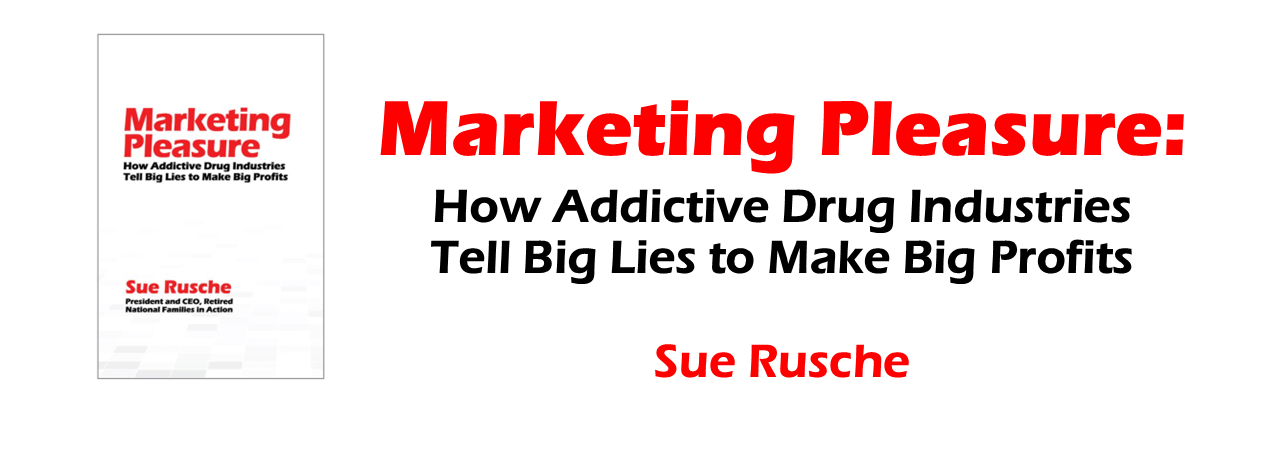
So the answer to my Google question is “Here we go again.” In my book, Marketing Pleasure, I explain that the Master Settlement Agreement of 1998 forced the tobacco industry to close the Tobacco Industry Research Committee (TIRC), founded in 1953. For half a century, TIRC conducted “scientific” studies to lie to the public so it could keep selling cigarettes.
Now it wants to sell “low-risk” products like tobacco pouches, nicotine pouches, and vapes while ignoring the fact that tobacco pouches can cause cancers of the mouth, gums, and tongue. Using nicotine pouches and vapes can addict kids and lead them to start smoking.
If you’re wondering what I’m talking about, Tobacco Tactics provides a nice overview of e-cigarettes (vapes), heated tobacco products, newer nicotine and tobacco products, nicotine pouches, and snus.
What have we learned from this? Don’t trust tobacco harm reduction.